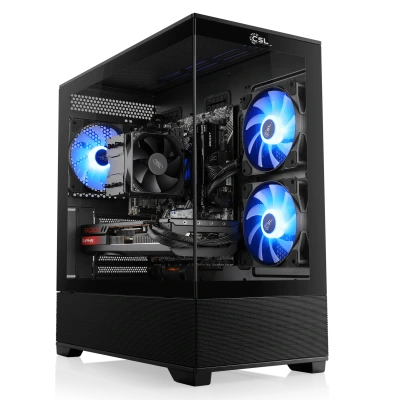
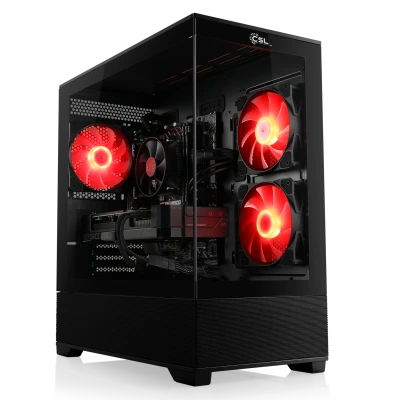
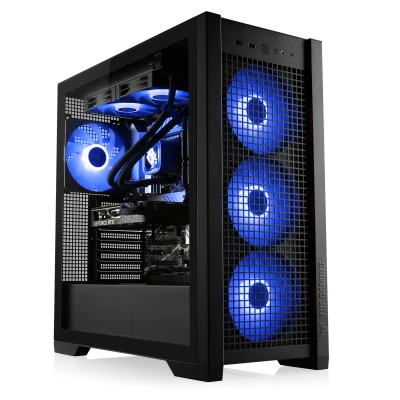
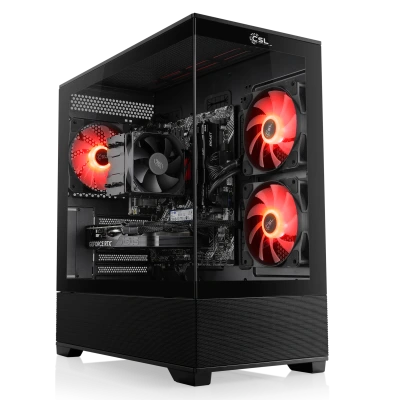
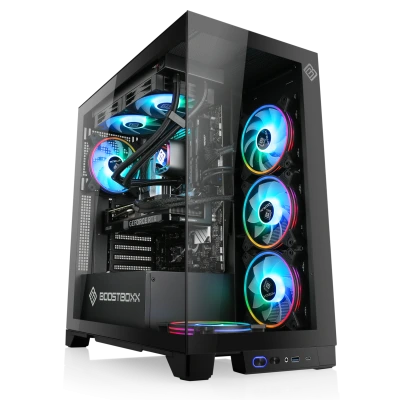
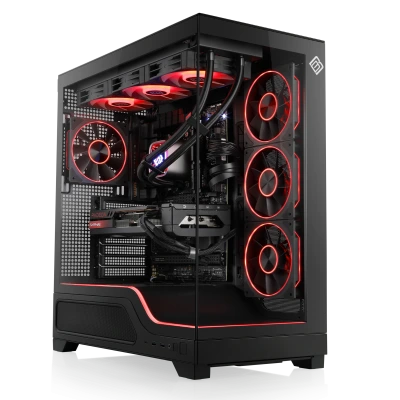
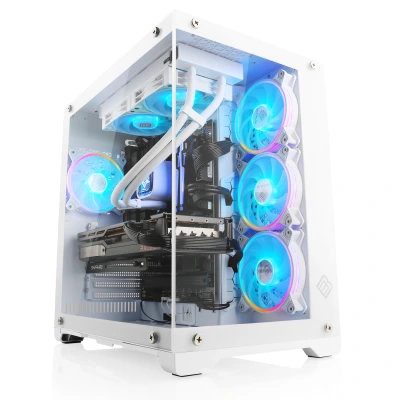
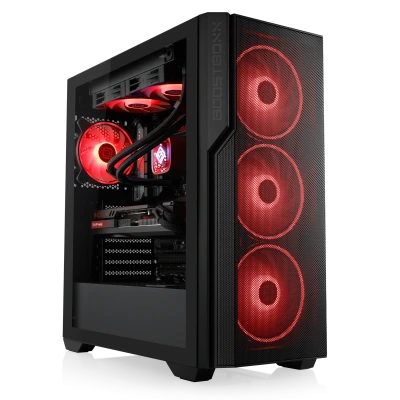
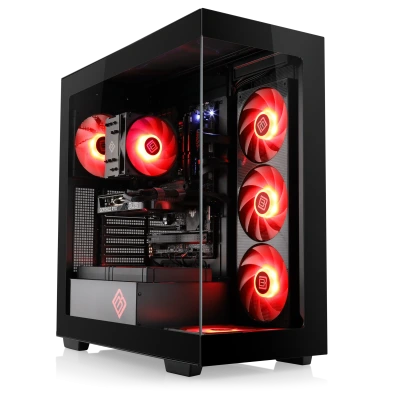
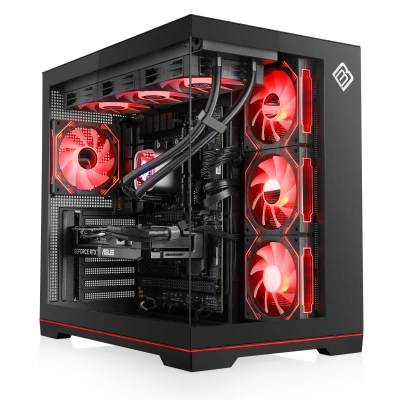
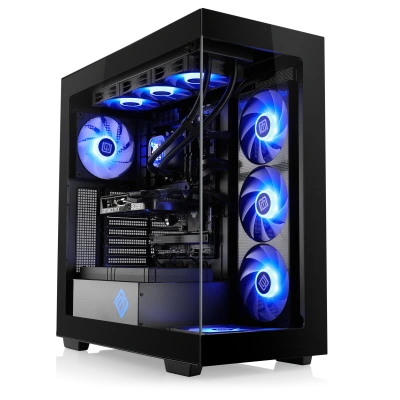
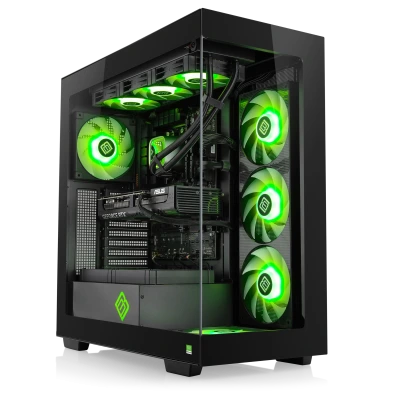
Buying an AMD Ryzen PC – What's Inside a CSL Complete System?
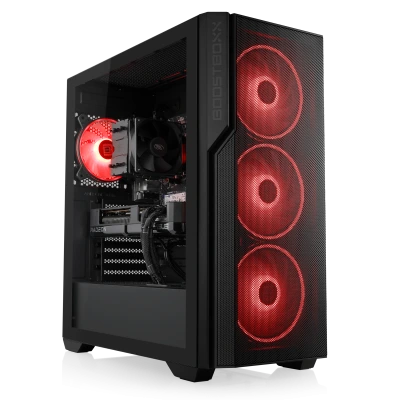
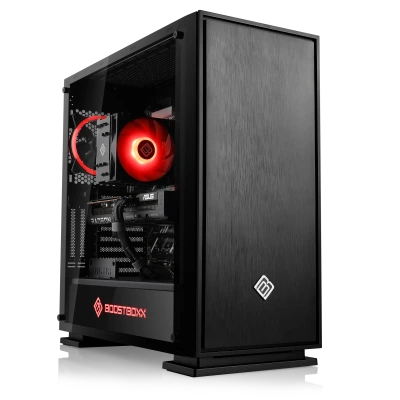
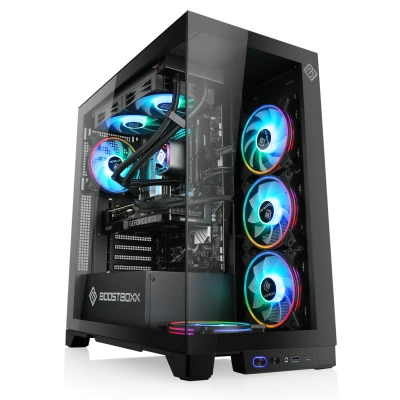
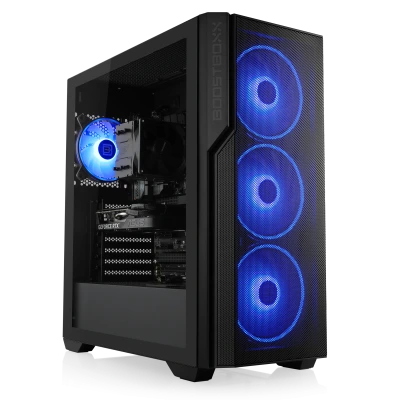
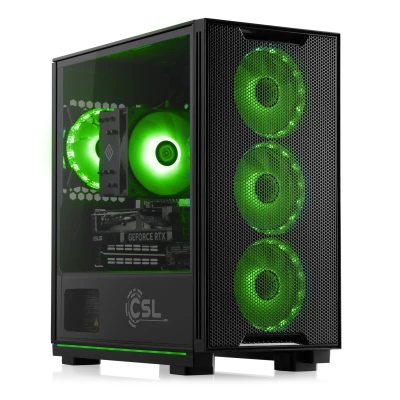
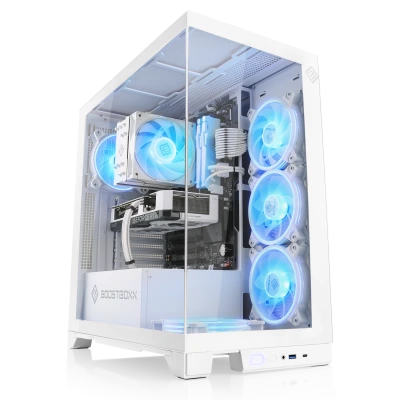
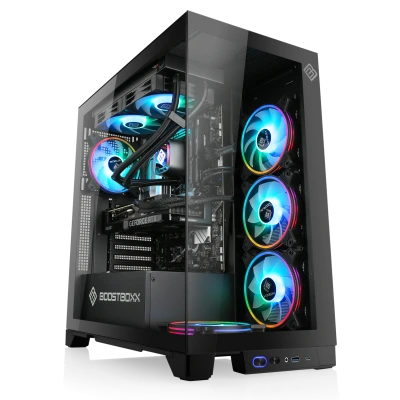
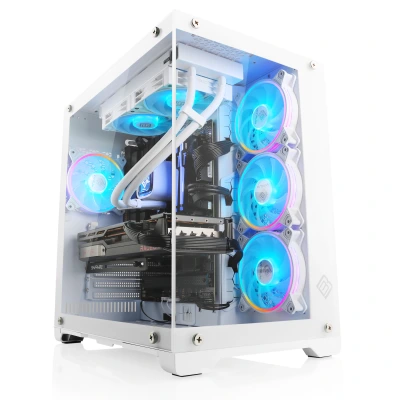
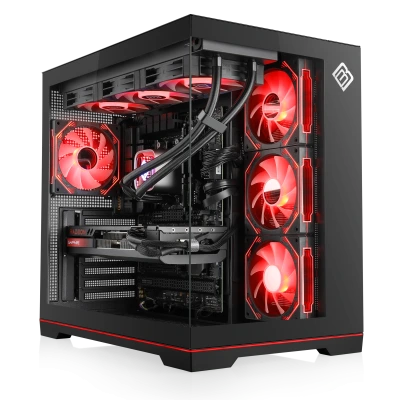
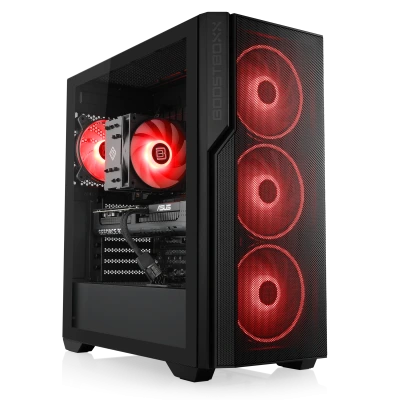
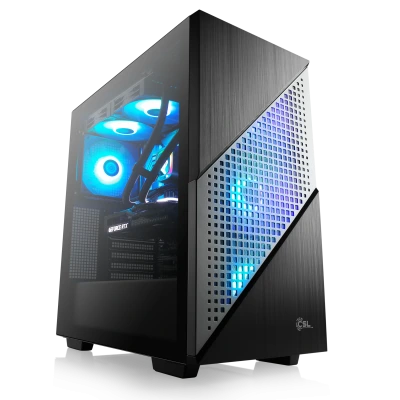
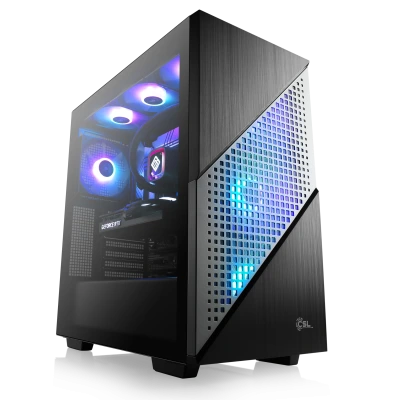
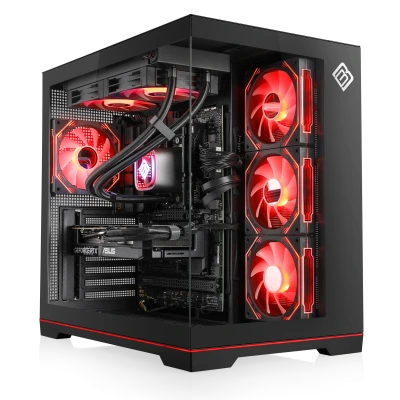
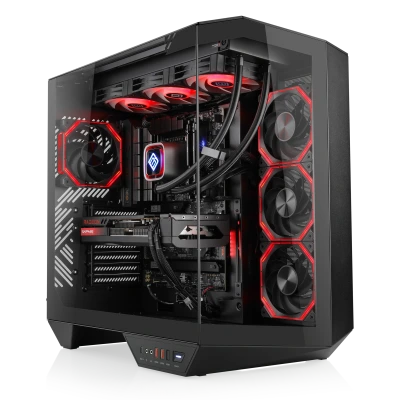
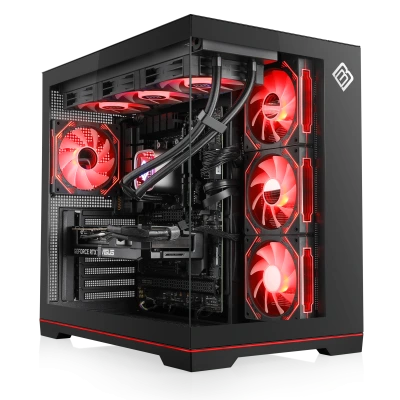
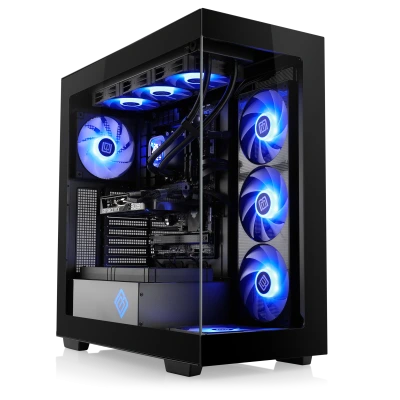
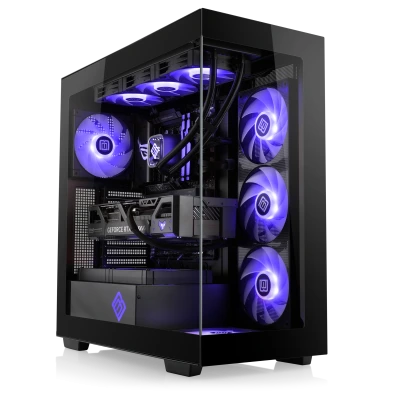
An AMD Ryzen PC from CSL Computer isn't a rigid pre-built kit – it's a professionally tested, optimally tuned PC system. That means all hardware components – from processor and motherboard to memory and NVMe SSD, up to case and power supply – are perfectly matched to each other, expertly assembled, and subjected to a multi-stage quality test before shipping. This ensures your new AMD PC runs absolutely reliably right out of the box.
Every system ships with the latest BIOS version, so the processor can deliver its full performance potential – including AMD Precision Boost – from the start. Since CSL offers a wide variety of systems without any operating system (in fact, more than pure Windows 11 systems), you have complete freedom when purchasing: simply use your own license or add a ready-to-use Windows 11 preinstalled with all necessary drivers directly via the configuration tool on each product page.
For users who want maximum flexibility in component selection, CSL also offers the comprehensive PC Configurator, where you can freely customize CPU, GPU, RAM, and storage. If you're looking for a purely focused system optimized from the factory for maximum gaming frame rates, take a look at our all-round Gaming PCs or the dedicated specialty category for AMD Ryzen Gaming PCs.
AMD Ryzen Processors at a Glance – From Ryzen 3 to Ryzen 9
The AMD Ryzen product family covers a broad performance spectrum for everyday use, work, and gaming. Depending on your usage profile and budget, you'll find the perfect system at CSL – here's an overview of the four Ryzen classes:
Ryzen 3 – Reliable Entry-Level for Everyday Use
AMD Ryzen 3 processors offer four powerful cores that are more than sufficient for all common everyday tasks: web browsing, office applications, email, video streaming, and basic image editing run smoothly and responsively. Ryzen 3 systems are particularly compact and energy-efficient – a cost-effective choice for budget-conscious beginners, pupils, students, or as a second home computer. Models with integrated Radeon graphics (G-series) also work completely without a dedicated graphics card.
Ryzen 5 – The Ideal Mid-Range for All-Rounders
With six to eight cores and high clock frequencies, the Ryzen 5 class offers the best price-to-performance ratio in the entire Ryzen family. A Ryzen 5 PC handles demanding tasks like photo and video editing, streaming, entry-level CAD projects, and modern gaming at a solid level. Models like the Ryzen 5 7600 (Zen 4, AM5) or Ryzen 5 9600X (Zen 5, AM5) are current bestsellers because they combine high single-thread performance with efficient multi-core power. For most private users, home workers, and casual gamers, a Ryzen 5 system is the perfect choice.
Ryzen 7 – High-End Performance for Creators and Power Users
The Ryzen 7 class targets users who work under load daily: video editing programs like DaVinci Resolve or Adobe Premiere, 3D modeling, music production, or parallel work with multiple resource-intensive applications – all of this a Ryzen 7 system masterfully handles. With eight cores, high multi-core scores, and efficient Zen architecture (Zen 4 or Zen 5), processors like the Ryzen 7 7700X or Ryzen 7 9700X offer noticeable reserves for the future. Models with 3D V-Cache (e.g., Ryzen 7 7800X3D, 9800X3D) are especially interesting for gaming-oriented creators – our Gaming PCs offer a dedicated gaming focus.
Ryzen 9 – Maximum CPU Power for Professional Tasks
AMD Ryzen 9 processors are the flagship of the Ryzen family, targeting professional users with the highest demands. With up to 16 cores and 32 threads, a Ryzen 9 system handles computationally intensive workloads that push other processors to their limits: 4K video rendering, complex 3D scenes, machine learning experiments, extensive simulations, or parallel use of multiple virtual machines. Current models like the Ryzen 9 9900X and Ryzen 9 9950X are based on Zen 5 and the modern AM5 platform – a future-proof investment for professional workstations.
AMD Ryzen X3D PC Systems – The Ultimate Processors for High-End Gaming
For gamers demanding maximum frame rates (FPS) and minimal frame times, there's no way around AMD's X3D processors. The special feature of these specialty CPUs lies in the so-called AMD 3D V-Cache: Through an innovative three-dimensional manufacturing process, AMD stacks additional Level-3 cache memory directly onto the processor die. While standard CPUs are often throttled by access times to system memory, the massive X3D cache keeps game-relevant data like geometry calculations and AI logic EXTREMELY close to the computing core. The result is a massive performance boost in modern games that easily surpasses even higher-clocked standard processors.
In our CSL complete systems, we use the groundbreaking generations of this gaming elite. The Ryzen 7 7800X3D on the AM5 platform is considered one of the most successful gaming processors ever, offering outstanding efficiency in gaming. With the Zen 5 architecture, the Ryzen 7 9800X3D and 9850X3D raise the bar even higher: By placing the cache component below the processor core, heat dissipation is dramatically improved, enabling even higher clock rates and absolute peak values in high-end gaming. If you're looking for uncompromising performance for competitive shooters, detailed open-world simulations, or VR gaming, an AMD Ryzen X3D PC from CSL is the perfect foundation. To unlock the full potential of these gaming CPUs, we recommend combining them with a powerful dedicated graphics card from our Gaming PCs category.
Which AMD Ryzen Generation Is Worth It in 2026? – Ryzen 5000, 7000, 8000, and 9000 Compared
AMD has launched several processor generations over the past years. The difference isn't just in performance, but also in the platform – and thus in your system's upgrade potential:
Ryzen 5000 (Zen 3) – AM4 Platform: The Ryzen 5000 series based on Zen 3 architecture remains one of the most popular desktop CPUs worldwide. They run on the proven AM4 socket with DDR4 RAM, making them particularly affordable. If you're looking for a cost-effective but powerful system and don't need immediate upgrade prospects, you'll find attractive offers here. Models: Ryzen 5 5500, Ryzen 7 5700X, etc.
Ryzen 7000 (Zen 4) – AM5 Platform: With the switch to AM5, AMD introduced DDR5 RAM and PCIe 5.0. The Zen 4 architecture brought an IPC increase of around 13% compared to Zen 3, plus significantly higher clock frequencies. AM5 is AMD's long-term platform – compatibility is planned through the Zen 6 generation. Especially popular: the Ryzen 7 7800X3D with 3D V-Cache.
Ryzen 8000 (Zen 4 with RDNA 3 iGPU) – AM5: The Ryzen 8000G series combines Zen 4 cores with a significantly more powerful integrated Radeon graphics (RDNA 3). These models are ideal for complete systems without a dedicated graphics card, as the iGPU also handles light gaming tasks and more demanding graphics work.
Ryzen 9000 (Zen 5) – AM5 Platform: The latest Ryzen generation is based on Zen 5 architecture with 4nm manufacturing technology. Compared to Zen 4, Zen 5 delivers another 16% more IPC in single-thread tasks, wider pipelines, and improved vector processing. All Ryzen 9000 models run on the AM5 socket and support DDR5 memory natively. For new purchases with maximum future potential, Ryzen 9000 systems are the top choice. Current models: Ryzen 5 9600X, Ryzen 7 9800X3D, Ryzen 9 9900X, Ryzen 9 9950X3D.
Recommendation: If you're buying a new system today and want future security, go for AM5 (Ryzen 7000 or 9000). For a cost-effective, immediately usable complete system, Ryzen 5000 systems on AM4 remain a valid option.
Current AMD Ryzen Desktop Processors 2026 – Model Overview
The following table gives you a structured overview of the most important current Ryzen processors installed in CSL complete systems. These details help you identify the perfect system for your requirements:
AMD Ryzen 5000 Processor Series (Socket AM4)
| Model |
Series / Architecture |
Core s/Threads |
Boost Clock |
TDP |
RAM |
Special Feature |
| Ryzen 5 5500 |
Ryzen 5000 / Zen 3 |
6 / 12 |
4.2 GHz |
65 W |
DDR4 |
Very affordable entry-level 6-core for budget gaming |
| Ryzen 5 Pro 5650G |
Ryzen 5000 / Zen 3 |
6 / 12 |
4.4 GHz |
65 W |
DDR4 |
Business model (Pro) with strong integrated Radeon graphics |
| Ryzen 7 5700 |
Ryzen 5000 / Zen 3 |
8 / 16 |
4.6 GHz |
65 W |
DDR4 |
Efficient 8-core processor without integrated graphics |
| Ryzen 7 5700G |
Ryzen 5000 / Zen 3 |
8 / 16 |
4.6 GHz |
65 W |
DDR4 |
Powerful 8-core APU with integrated Vega graphics unit |
| Ryzen 7 5700X |
Ryzen 5000 / Zen 3 |
8 / 16 |
4.6 GHz |
65 W |
DDR4 |
Very popular, power-efficient 8-core for gaming upgrades |
AMD Ryzen 7000 Processor Series (Socket AM5)
| Model |
Series / Architecture |
Core s/Threads |
Boost Clock |
TDP |
RAM |
Special Feature |
| Ryzen 5 7500F |
Ryzen 7000 / Zen 4 |
6 / 12 |
5.0 GHz |
65 W |
DDR5 |
Price-to-performance hit for AM5 entry (without iGPU) |
| Ryzen 5 7600X3D |
Ryzen 7000 / Zen 4 + 3D V-Cache |
6 / 12 |
4.7 GHz |
65 W |
DDR5 |
Efficient 6-core with 3D cache for pure gaming |
| Ryzen 7 7700 |
Ryzen 7000 / Zen 4 |
8 / 16 |
5.3 GHz |
65 W |
DDR5 |
Includes cooler, excellent balance between gaming and multi-thread |
| Ryzen 7 7800X3D |
Ryzen 7000 / Zen 4 + 3D V-Cache |
8 / 16 |
5.0 GHz |
120 W |
DDR5 |
96 MB 3D V-Cache, one of the most successful gaming processors |
| Ryzen 9 7900 |
Ryzen 7000 / Zen 4 |
12 / 24 |
5.4 GHz |
65 W |
DDR5 |
Extremely power-efficient 12-core powerhouse for workstations |
| Ryzen 9 7900X |
Ryzen 7000 / Zen 4 |
12 / 24 |
5.6 GHz |
170 W |
DDR5 |
High-end workstation performance with high clock frequency |
AMD Ryzen 8000 Processor Series (Socket AM5)
| Model |
Series / Architecture |
Core s/Threads |
Boost Clock |
TDP |
RAM |
Special Feature |
| Ryzen 5 8400F |
Ryzen 8000 / Zen 4 |
6 / 12 |
4.7 GHz |
65 W |
DDR5 |
Affordable entry CPU without iGPU and without NPU (AI core) |
| Ryzen 7 8700F |
Ryzen 8000 / Zen 4 |
8 / 16 |
5.0 GHz |
65 W |
DDR5 |
8-core model without integrated graphics, but with Ryzen AI NPU |
| Ryzen 7 8700G |
Ryzen 8000 / Zen 4 |
8 / 16 |
5.1 GHz |
65 W |
DDR5 |
Top APU with extremely powerful Radeon 780M graphics and Ryzen AI |
AMD Ryzen 9000 Processor Series (Socket AM5)
| Model |
Series / Architecture |
Core s/Threads |
Boost Clock |
TDP |
RAM |
Special Feature |
| Ryzen 5 9600X |
Ryzen 9000 / Zen 5 |
6 / 12 |
5.4 GHz |
65 W |
DDR5 |
Highly efficient mid-range processor with strong pro-core performance |
| Ryzen 7 9800X3D |
Ryzen 9000 / Zen 5 + 3D V-Cache |
8 / 16 |
5.2 GHz |
120 W |
DDR5 |
Inverted 3D V-Cache (under the die) for optimal cooling and maximum gaming performance |
| Ryzen 7 9850X3D |
Ryzen 9000 / Zen 5 + 3D V-Cache |
8 / 16 |
5.4 GHz |
120 W |
DDR5 |
Select X3D model with increased factory clock for enthusiasts |
| Ryzen 9 9900X |
Ryzen 9000 / Zen 5 |
12 / 24 |
5.6 GHz |
120 W |
DDR5 |
12-core high-end model for demanding productivity applications |
| Ryzen 9 9950X3D |
Ryzen 9000 / Zen 5 + 3D V-Cache |
16 / 32 |
5.7 GHz |
120 W |
DDR5 |
16-core flagship with massive cache for gaming and creation |
| Ryzen 9 9950X3D (Dual) |
Ryzen 9000 / Zen 5 + Dual 3D V-Cache |
16 / 32 |
5.7 GHz |
120 W |
DDR5 |
Enthusiast configuration with extended cache resources on both CCDs |
Specifications according to manufacturer data (as of: May 2026). Actually installed models vary depending on system configuration. Please check individual product pages for current availability and configuration options.
Buying an AMD Ryzen PC – What Should You Consider?
An AMD Ryzen complete system isn't just any complete system. Besides the processor itself, several other components significantly determine how well and how long your PC will handle its tasks. At CSL, all systems are already optimally tuned – but it's worth knowing the most important factors:
Memory (RAM): 16 GB as Base, 32 GB for Demanding Tasks
For Windows 11 and common office applications, 16 GB RAM is today's minimum for smooth operation. Anyone who regularly works with image editing programs like Photoshop, video editing software, or multiple browser tabs simultaneously will clearly benefit from 32 GB. Systems with Ryzen 7000 or 9000 processors use exclusively DDR5 RAM, which offers higher bandwidth and better efficiency than DDR4. Ryzen 5000 systems (AM4) run with proven DDR4.
Storage: NVMe SSD for Short Load Times
A fast NVMe SSD as the system drive is standard in modern complete systems. It ensures fast boot times, quick application opening, and smooth load times. For starters, 500 GB is enough for the operating system and essential programs; anyone storing many photos, videos, or games should plan for at least 1 TB. Many CSL systems offer the option to add a second SSD or HDD for mass storage via options on the product page.
Graphics: Integrated or Dedicated for Gaming?
Ryzen G models (e.g., Ryzen 5 5700G, Ryzen 7 8700G) have integrated Radeon graphics that are完全 sufficient for office applications, 4K video streaming, and light creative tasks. For more demanding image editing, 3D rendering, or modern games, a system with a dedicated graphics card is recommended. In this general AMD category, we also list versatile gaming PCs that perfectly combine everyday and gaming performance. If your main focus is on uncompromising high-end gaming, our specialized Gaming PCs and the AMD-optimized AMD Ryzen Gaming PCs offer a more targeted selection without compromising the all-round strengths of this category.
Power Supply: Adequately Dimensioned for Future Upgrades
CSL systems ship with appropriately dimensioned power supplies. If you plan to add a dedicated graphics card later, make sure at purchase that the power supply offers at least 550 W and has an 80PLUS efficiency standard. Our Upgrade PCs are specifically designed for later expansions.
Platform and Future Security: AM4 or AM5?
If you're buying a system that should be upgradeable with a new processor in the coming years, go for the AM5 platform today. AMD has confirmed that AM5 will be supported at least through the Zen 6 generation (expected 2026/2027). AM4 systems are an excellent choice if the focus is on low price and immediate use, without future CPU upgrade needs.
Operating System and Configuration: Full Flexibility at CSL
In CSL's assortment, you have maximum freedom of choice: Many of our PCs ship without an operating system, as systems without software licenses are a very popular and flexible option. You can use your own Windows or Linux license. Alternatively, via the online configuration tool on each product page, you can set up a fully activated Windows 11 with all drivers, so your computer is ready to use immediately. Additionally, this tool allows individual customization of all hardware components before purchase.
AMD vs. Intel – Is a Ryzen PC the Better Choice for You?
The decision between AMD Ryzen and Intel Core depends on your personal usage profile. Both platforms offer excellent performance in 2026 – the differences lie in details that are more or less relevant depending on the application case.
AMD Ryzen scores particularly in:
- Price-to-Performance Ratio: In comparable price classes, Ryzen processors often offer more cores and higher multi-core performance than Intel's competing models.
- Content Creation and Multitasking: Many cores at affordable prices make Ryzen the preferred platform for video editing, 3D rendering, and parallel workloads.
- Platform Longevity: The AM5 socket is AMD's long-term investment – CPU upgrades are possible without replacing the motherboard.
- Energy Efficiency: The 65W variants of the Ryzen 7000 and 9000 series are among the most efficient desktop CPUs on the market.
Intel Core offers advantages in:
- Strong single-thread performance in certain application scenarios
- Intel Core Ultra processors with integrated NPU for Windows 11 AI features (Copilot+)
- Broad availability in office and business systems
For a direct system comparison, we recommend browsing our Intel PC Systems as well. If you have questions about decision-making, our service team is available by phone.
Explore More PC Categories at CSL
Frequently Asked Questions About AMD Ryzen PC Systems
What's the Difference Between Ryzen 5, Ryzen 7, and Ryzen 9?
The number in the Ryzen name indicates the performance class. Ryzen 5 offers six to eight cores and is the best all-rounder for office, multimedia, light creative tasks, and gaming. Ryzen 7 is also eight-core, but with higher clock rates and more cache, designed for power users, gamers, and content creators. Ryzen 9 offers up to 16 cores and targets professional users who need maximum multi-core performance for rendering, simulation, or workstation tasks. For most private users, Ryzen 5 is the most cost-effective choice.
Which AMD Ryzen PC Is Suitable for Office and Home Office?
For typical office and home office tasks – word processing, spreadsheet calculations, video calls, web browsing – a Ryzen 5 system is completely sufficient. Recommended are AM4-based models (e.g., Ryzen 5 5600) for affordable entry prices or AM5-based models (e.g., Ryzen 5 7600) for more future security. Make sure to have at least 16 GB RAM and an NVMe SSD as the system drive – this affects perceived speed much more than the pure CPU choice. Every setup can be flexibly configured via the product page.
Are All AMD Ryzen Complete Systems from CSL Delivered with Preinstalled Windows 11?
No, standardly we deliver a wide variety of our systems completely without an operating system, as this option is very popular with customers who have existing licenses. However, with every model via the configuration tool on the product page, you have the full freedom to add a ready-to-use Windows 11 with all drivers to your order with just a few clicks.
Which Ryzen Generation Is Still Worth Buying in 2026?
Ryzen 5000 systems (AM4, Zen 3) are still a very good choice in 2026 if price is the main factor. Anyone valuing future security should go for AM5: Ryzen 7000 systems (Zen 4) offer excellent performance at now attractive prices, Ryzen 9000 systems (Zen 5) are the technically latest option. AMD has confirmed the AM5 platform as a long-term base – so a Ryzen 7000 or 9000 system is an investment that also supports future CPU generations.
Can I Upgrade an AMD Ryzen PC from CSL Later Yourself?
Yes, most CSL complete systems are designed for later expansions. RAM can be easily expanded at free slots, additional SSDs or HDDs can be installed later, and on AM5 systems with given motherboard support, a future CPU switch to subsequent Zen generations is even possible. If you're looking for a particularly upgradable system, we recommend taking a look at our Upgrade PCs, which are specifically designed for expansions.
Is an AMD Ryzen 9 PC Worth It for Content Creation and Video Editing?
Absolutely – the Ryzen 9 class is an excellent choice for professional content creators. Twelve or 16 cores enable fast rendering in DaVinci Resolve, Adobe Premiere, or After Effects, smooth 4K editing work, and short export times. 3D applications like Blender also benefit significantly from the high core count. Compared to a Ryzen 7 system, the price difference amortizes quickly if rendering and export occur daily. For occasional video editing, a Ryzen 7 system is often completely sufficient.
What Does X3D Mean in AMD Ryzen Processors and What Advantages Does It Offer?
The abbreviation X3D identifies AMD processors equipped with the innovative 3D V-Cache. Additional, extremely fast Level-3 cache is stacked vertically onto the processor block (e.g., 96 MB in the Ryzen 7 7800X3D and up to 144 MB total cache in the Ryzen 7 9800X3D). Since modern PC games heavily benefit from fast memory access, this massive cache delivers noticeably higher frame rates (FPS) and more stable frame times, especially in CPU-intensive gaming scenarios. For pure gaming PCs, X3D processors therefore offer the current best performance on the market with simultaneously exemplary low power consumption.